
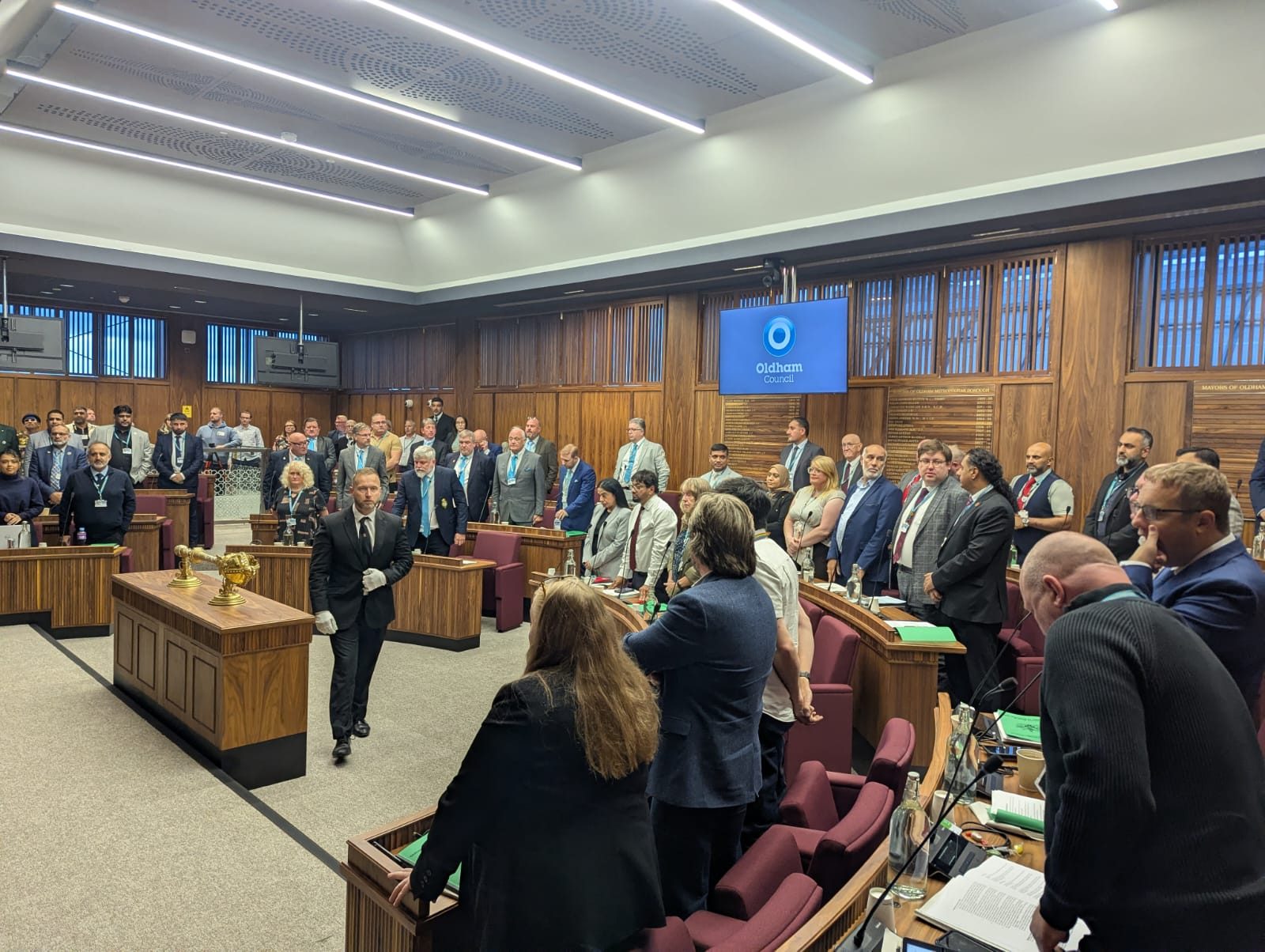
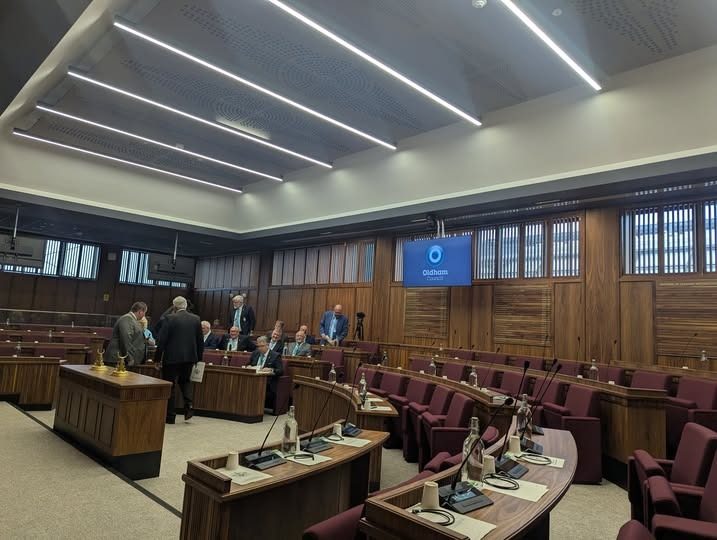
Oldham Council met on Wednesday 16 September but the political deadlock still couldn't be resolved.
Though five motions were on the table from five different parties, covering issues from getting the basics right, tackling anti-social behaviour, Beal Valley and Broadbent Moss, through to fireworks sales and child poverty.
All eyes were on the recommendations from the officers to amend the constitution to overcome the stalemate in forming an executive administration.
Mayor, Pam Byrne moved that the three agenda items covering the constitution (the interim governance report, remuneration for the positions within that report, and the proposed interim constitution), were moved to precede the motions and all other business.
The proposal was accepted and the mayor sought to move to the vote in which Councillors were asked to choose between the present leadership standstill and an interim constitutional solution that would distribute chairs of committees and delegations to external bodies such as the GMCA proportionate to party representation in the Chamber, and with each of the four larger party leaders being aligned with the Council’s directorates.
Without a leader, deputy and cabinet, the Council would necessarily continue with the Chief Executive, Shelley Kipling, making executive and emergency decisions after having consulted with party leaders in fortnightly meetings as is the case at present.
With rules governing officers speaking to Council suspended, Shelley Kipling spoke about the report and made clear that the recommendations did not change the unlawfulness of the present lack of leadership but provided the opportunity to enable a degree of involvement and scrutiny of services from elected members.
None of the committee positions would have decision making powers and should not be considered as executive or cabinet roles.
Payment for such roles has been determined by an independent remuneration panel and will only be paid upon a councillor attending for the full duration of any meetings they attend.
Ms Kipling made clear that to not endorse the proposals would lead to central government intervention which would be at a financial cost. She pointed out that should a leader be elected, then all the interim measures would cease as the Council would meet its legislative obligations under the Local Government Act 2000.
Mark Wilkinson, Reform UK leader, stood first to say that his group would abstain from a vote. Upon this statement being made, Arooj Shah, leader of the Labour Group, stood to inform the Council that Mark Wilkinson, as the new leader of Reform UK, contradicted what the leaders of other parties had agreed to earlier in the week. She proposed that the meeting should be adjourned for the leaders to meet and discuss the situation and the meeting was adjourned after half an hour.
Upon resuming the meeting at 7.15pm, Reform UK Councillor Taylor asked for clarification on what would happen if groups opted out of the proposed allocation of positions and whether an amendment could be proposed.
There was no discussion on the matter, and the Mayor, Pam Byrne, took all three items straight to the vote with the first to accept the report, second to accept the recommendations of the Remuneration Panel and the third on the interim constitutional measures.
The report was accepted with 45 voting for, 1 against and 4 abstentions. The recommendations for remuneration for the roles within the report passed with 48 for and 1 abstention.
The final vote on the proposals before the Council and regarding the amended constitution attracted more votes against and more abstentions but passed with 34 supporting the recommendations, 11 against and 7 abstentions.
Since there was no public discussion on the matter, it is unknown whether all parties will actually participate proportionately to their representation in the Chamber.
Comments (0)
Comments are moderated before publishing. Links and abusive language are not allowed.
No approved comments yet.