
25 years ago, riots tore through the Glodwick estate in Oldham, turning it into a rubble-strewn warzone. One of the immediate causes of the riots was the attack on a pregnant Asian woman by a group of white men.
The following unrest, which made international news, was later described as the worst in two decades. Large groups of young men hurled stones, bricks, pieces of wood and even home-made petrol bombs at police in a deadly game of cat and mouse.
They torched cars and blocked main roads with burning barricades. Helicopters circled overhead and the sound of screaming sirens filled the air.
The rioters vandalised the Oldham Chronicle’s offices and smashed windows of nearby pubs. But what has changed since those three consecutive nights when up to 500 young men fought pitched battles with the police, resulting in at least 20 people being injured including 15 officers?
The findings of the Ritchie Report
Published in December 2001, David Ritchie had written a 100-page independent review looking at the causes of the riots, and his findings were grim. A lack of community cohesion was cited as the root cause. Racism, Ritchie noted, was not a one-way issue: there had been growing reports of racist incidents against white residents too.
Far right groups—the BNP, and the National Front— exploited these long-standing divisions by playing the blame game. The report also suggested that most of the major employers in Oldham had failed to diversify their workforce.
It highlighted that Asian and white communities lived separate lives, creating a culture that fostered suspicion and hostility. Ritchie criticised the authorities for lacking strategic direction, having poor leadership, and a failure to tackle segregation in housing and education. The report made 120 recommendations.
It recommended that Oldham needed a clear vision and strategic input for future development, including the importance of implementing more community-focused policing and making changes to housing policies to encourage integration.
At the time, council leaders denied accusations that they had ignored segregation for over 30 years. They argued that poverty and social exclusion — not race — had fuelled the unrest.
Firebombed
Riaz Ahmad, who was the deputy mayor during the riots, said the Ritchie Report was accepted by everyone; the recommendations were right. He believes, since then, housing has become integrated by making sure that people from different communities are allocated houses to implement integration.
“Different schools have been brought together. For example, Count Hill school used to be all-white, and Breeze Hill was majority Asian, so the council combined them and created Waterhead Academy. Students from different backgrounds now study together, play together and sit next to each other in class,” Ahmad said.
Ahmad, whose home was firebombed in a “racist attack” after the riots, added: “Almost all the recommendations of the report have been taken on. I can’t think of anything that hasn’t been implemented.”
He said the main catalyst for the riots was fearmongering by the far-right who came to Oldham week after week in the build-up to the riots to “harass and intimidate" people, causing tensions to rise.
“I say everybody failed: politicians, local authority, press, everyone. We all must answer for what went wrong,” he said. “It’s wrong to blame one section of the community or one age group or one area of Oldham. We all could have done better. The Ritchie report found this as well.”
From chaos to order
Alongside Ahmad was Basit Shah, a former councillor. They were both heavily involved in trying to diffuse the situation in Glodwick when the riots exploded.
Shah is one of the founders of the 40 member Oldham Mosques Council. It was created so that Oldham’s Muslim community could have a platform and be represented at the Interfaith Forum.
“There has been improvement in integration as people have moved from segregated places like Glodwick to Hathershaw. People have also moved from Chadderton to Fitton Hill,” Shah said. “If you look at Fitton Hill, it used to be a predominantly white area, but when you walk through there now you will find a lot of Asian families.”
Another positive product of the riots was the establishment of the Oldham-wide Interfaith Forum. Members of the Forum go to different areas of Oldham and host ‘Any Questions’ sessions where a panel including Jewish, Muslim, Christian and Hindu leaders answer questions about their respective faiths.
Reverend Phil Sumner, a trustee and project manager at the Forum, said their work has been crucial in preventing tensions from reigniting.
“After the tragedy in Southport, where three children were murdered, we saw the asylum seeker, the Muslim and immigrant communities being blamed,” he said. “We knew we had to stand together. I was invited to speak at a mosque after Friday prayers and on the following Sunday, Mawlana Akmal Hussain came to speak at our church. He received a warm welcome.”
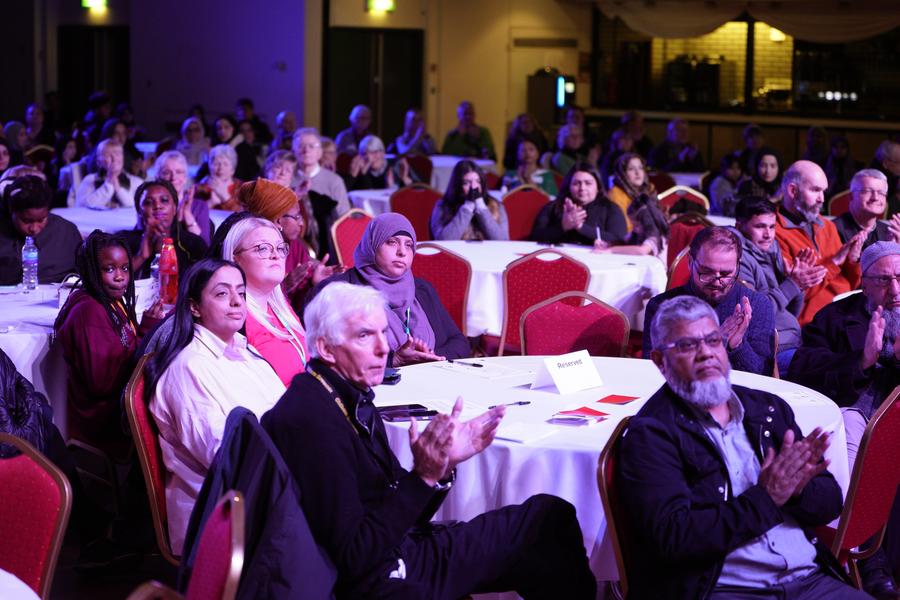
There are many events the Forum organises, including the ‘Festival of Light’ when they bring together 500 people from Oldham’s diverse communities, and they put on a celebration of various religious festivals.
Over the past year, they engaged well over 9,000 pupils across Oldham’s school system, including the Oldham Sixth Form college and secondary schools such as Radclyffe School. They also gave presentations to students at 40 primary schools across Oldham.
Sumner believes the widespread 2024 riots didn’t spill over into Oldham partly because of the work done by the Forum and other partners in the borough, and due to the links between different faith communities.
But not everyone believes Oldham has progressed enough.
Slow but steady progress
Cllr Howard Sykes, leader of the opposition at Oldham council isn’t very optimistic. He said there has been some improvement, but change is very slow and gradual.
“There has been mixing in Oldham but nowhere near as it is in places like Bury or Manchester. Oldham is less segregated now but not by much,” he said. “One good thing is that communities of all faiths including Christians and Muslims play a key part in life in this borough.”
The situation in the former mill town has improved over the past two decades—for the better—as progress has been made in education, housing and integration thanks to the dedicated campaigners who work tirelessly without recognition and have succeeded in bringing together all communities.
The town’s scars are slowly fading, but the lessons from those few nights of disturbances continue to shape Oldham’s future.
The Council was approached for comment.
Comments (0)
Comments are moderated before publishing. Links and abusive language are not allowed.
No approved comments yet.